
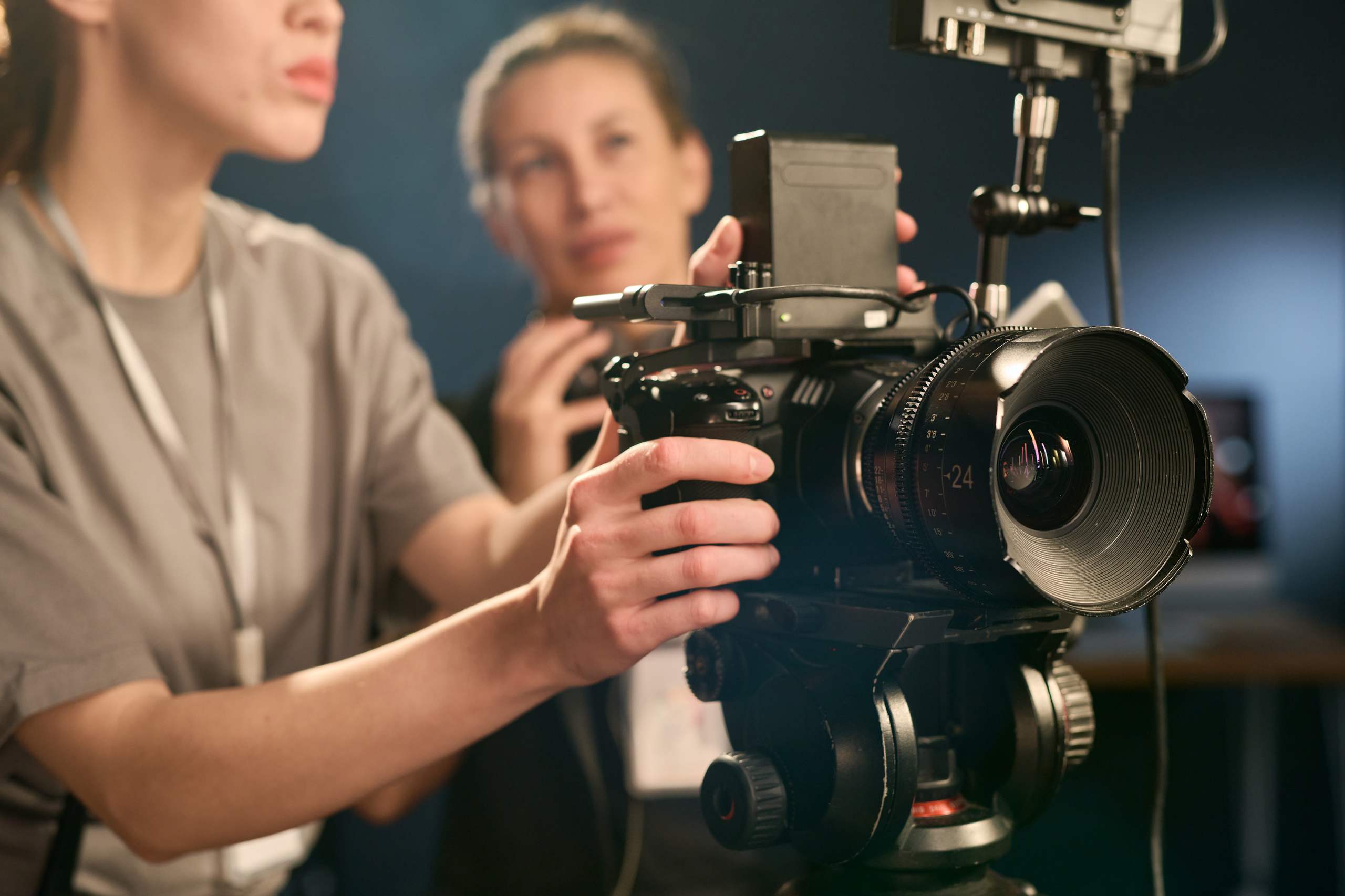
Many of you have started your journey in the world of video shooting by pressing the record button and just shooting what’s in front of you. This seems to make the most sense, since, after all, you are only seeing the first thing on the scene that catches your attention and that seems interesting. However, it is quite common that many people realize that recording is not the same as making a video that will be memorable to someone. That difference, as I will try to explain below, is the essence of storytelling.
Storytelling does not imply that there must always be a script for each shooting or that we must have actors at all times. In fact, the vast majority of videos in which there is a story do not need to be so complex scenarios. The basic concept is that you should know what you can express with a frame and not so much what to shoot in each one. Instead of asking yourself what to shoot you should ask: what do you want to tell your viewers? The question is what you want to say. It is not about recording but about choosing what and how much to record to be able to tell the story.
To do this it is often helpful to have an idea of the structure of the story, even a basic one. For example, you could say that each video could be divided into three parts: beginning, development and end. The beginning consists of showing context: what we are talking about? What is going on? Who is involved? Then follows the development: it will be the continuation of everything, it will show how things progress or what happens. Finally, the end: how to finish it, what the last image is that you want to see and how the story closes. It is not necessary that the story always has to follow this structure perfectly, but it will certainly be good for you to have an idea of how your video is going to look in the end.
Also, as in all writing, the choice of the shots we choose to show is key to telling the story. A frequent mistake among beginners is to want to record everything, thinking that more is better. The truth is, however, that the most powerful videos are always defined by the choices that are made. What not to shoot is almost as relevant as what to shoot. In some cases, a detail seen in close-up is able to tell more than a general view of everything at once. If the shooting is always done with a lot of content, the result will not have much effect. For those who want their videos to look professional, learning to be selective is essential.
On this occasion, I do not want to get too technical, but I want to give a small tip. Framing and composition are also part of storytelling. The subject matter is always going to have its importance, but the way it is framed will also have a huge effect. A frame taken from below can give more force to the shot, while one taken from above can make the subject look further or more thoughtful. Framing helps show emotions, highlight details and show context. This is no mere technicality, but an important part of storytelling, which influences the way the viewer receives the information.
Another essential element for the creation of stories in video is movement. A still shot can give a feeling of tranquility, stability, seriousness. A movement can give a sense of discovery or change in the story or situation. Fast movements can give a more agitated impression, or a more dramatic or intense tone. It is the movement that adds something to the story. Again, movement can be done in many different ways, but what matters is that it must always have the purpose of adding to the image what the image itself could not convey.
Another element that is often very underestimated by the beginner but that is fundamental is sound. Sound can change everything in a piece of content, as well as in a piece of photography. Even if a shot is well framed, if it lacks the right rhythm and sound will not be memorable. The same happens with the images: it is important that the video has an internal logic. It should be possible to make small and slow images, as well as to make cuts more quickly. In addition, pauses can be given when a more emotional tone is sought to give a little more time. This is what gives the video that feeling of “being alive” and not random fragments.
It is also very common for a beginner not to think of the frames within the whole, but only of each shot. However, a story must tell its story between shots. We must learn to tell the story using multiple images or shots instead of only one. A general shot can give the context, the medium shot can show us a situation, and a close-up allows us to see the details that can change everything. It can be that there is a series of shots that do not seem important, but in the end all come together to tell a certain story. The viewer will not even think about it, but the sequence of images gives that sense of progression. If a shot is not seen in its context, it is difficult to tell a story. It does not matter if the frame is perfect, if you cannot see the sequence and the meaning between frames, everything will be lost in its value.
In summary, the key is that when we talk about video we are talking about telling a story and not just about making shots. At FrameCapturePro we focus on this in all our courses because we have a clear focus: we want to teach not only theory but to give our students the opportunity to practice every new technique they learn. We focus on the creation of content so that our students learn to tell stories, to make good decisions, and not just record. In the same way, we teach to think in a sequence, to use all the possibilities in shooting, and to always be aware of meaning.
In the end, telling stories is not about making things complicated, because sometimes a simple frame can say a lot, but about knowing exactly what you want to say and how you want to show it. It is enough to stop focusing on shooting and to start focusing on meaning, because only then the most basic shots will start to take shape. Only then will our recordings stop being a random collection of images and become stories.